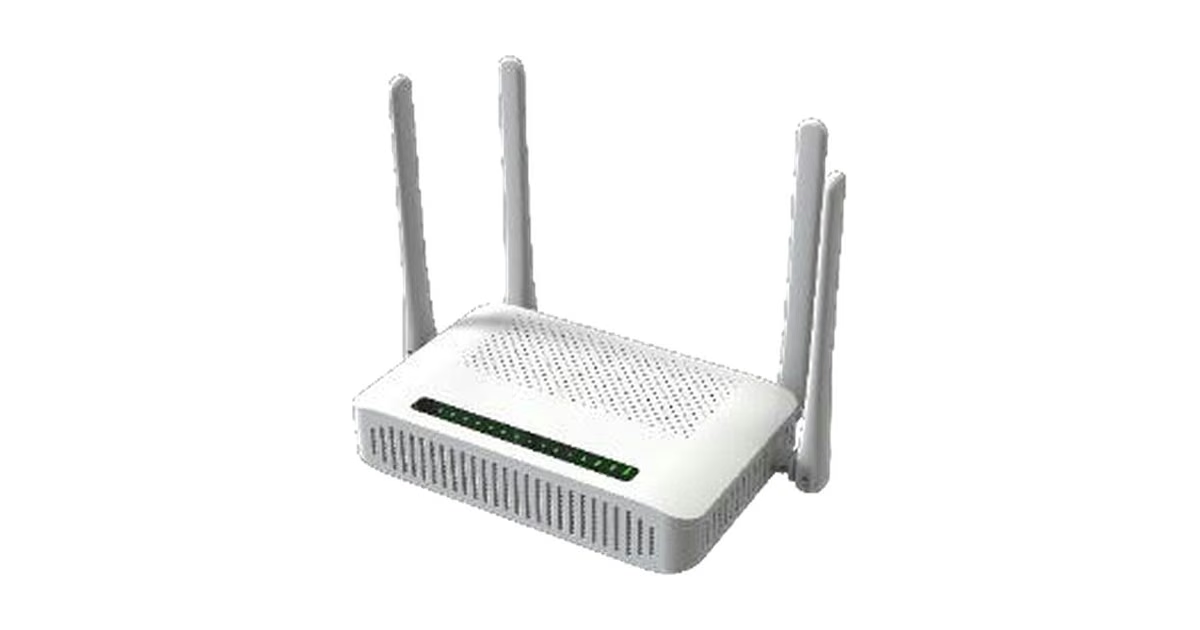
5G RedCap (Reduced Capability) is a 5G NR device type defined in 3GPP Release 17 for devices that need more than LTE-M or NB-IoT but much less than a flagship 5G smartphone modem. It keeps the 5G air interface and connects over 5G Standalone, and it trims the most expensive parts of the radio: channel bandwidth, antenna branches and MIMO layers. You will also see it called NR-Light.
This article explains what 5G RedCap changes compared with full 5G NR, how it compares with LTE categories, what Release 18 eRedCap adds, and which devices it suits. It is written by the AceTel FAE team. Section 7 walks through RedCap design trade-offs using the AceTel M06 5G RedCap MiFi as the example.
1. Why 5G RedCap Exists
The first 5G releases (Rel-15 and Rel-16) covered two extremes. At one end is enhanced mobile broadband (eMBB), with wide channels, four receive antennas and multi-gigabit peaks. At the other is ultra-reliable low-latency communication (URLLC). Massive IoT stayed on LTE-M and NB-IoT.
That left a gap. Industrial wireless sensors, video surveillance cameras and wearables need more throughput than LTE-M. They do not need a full 5G modem’s bandwidth, antenna count, cost or power draw. 3GPP names these three device classes as the target use cases for RedCap (3GPP: NR RedCap, a glimpse). Today, many of these devices use LTE Cat 1 or Cat 4 modules. 5G RedCap gives them a native 5G path.
2. What 5G RedCap Removes from Full 5G NR
The cost savings come from a short list of capability limits. The table compares a Release 17 RedCap device in FR1 (sub-7 GHz) with a regular 5G NR device.
| Capability | Regular 5G NR device (FR1) | 5G RedCap device (Rel-17, FR1) |
|---|---|---|
| Max UE bandwidth | Up to 100 MHz per carrier | 20 MHz, during and after initial access |
| Receive branches | Minimum 2 or 4, depending on band | Minimum 1 (1 Rx or 2 Rx) |
| DL MIMO layers | Up to 4 | 1 layer with 1 Rx, 2 layers with 2 Rx |
| Carrier aggregation / dual connectivity | Supported | Not supported |
| EN-DC (NSA) and NE-DC | Supported | Not supported |
| FDD duplex | Full duplex | Full duplex optional; half-duplex FDD allowed |
| DL 256QAM | Supported | Optional (64QAM required) |
Sources: the 3GPP MCC overview for bandwidth, Rx branches and MIMO layers; Rel-17 RedCap work item and RAN2 agreements for the CA, DC and EN-DC exclusions; and the Rel-17 RedCap overview by Ericsson researchers for half-duplex FDD and 256QAM.
Each limit removes hardware. Fewer receive chains mean fewer antennas, RF front-end parts and baseband processing paths. A 20 MHz channel shrinks buffers and FFT size. Half-duplex FDD lets a device drop the duplex filter. Together, these changes are designed to narrow the size, cost and power gap between a 5G module and an LTE module, while staying on a 5G network.
3. What RedCap Keeps from 5G NR
5G RedCap is still 5G NR, not a separate radio technology:
- 5G Standalone access. EN-DC is not supported, so RedCap devices attach through the 5G core (5GC) over SA. The device can use SA-network services, such as network slicing, where the operator offers them.
- The same NR spectrum. A RedCap device works inside the operator’s existing 5G carriers and shares them with phones and CPEs. It operates within its own 20 MHz bandwidth.
- Power-saving features for battery devices. Release 17 adds optional extended DRX (eDRX) in idle and inactive states, with idle-mode cycles up to 10,485.76 seconds. It also adds network-enabled relaxation of neighbour-cell measurements for stationary devices or devices not at the cell edge. Both matter for sensors and trackers that spend most of their life asleep.
4. How Fast Is RedCap?
There is no single “RedCap speed”. The peak rate depends on four implementation choices:
- Receive branches: 1 Rx (one layer) or 2 Rx (two layers) roughly doubles the downlink ceiling.
- Modulation: 64QAM or optional 256QAM on the downlink.
- Duplex mode and TDD pattern: on TDD bands, the operator’s uplink/downlink split sets the usable share.
- Actual channel: the 20 MHz limit is a maximum, and the operator configuration decides what the device gets.
5G RedCap Peak Data Rate
The table below gives the theoretical peak rates of a Rel-17 5G RedCap device on a full 20 MHz FR1 FDD carrier. We calculated them with the peak data rate formula in 3GPP TS 38.306 (section 4.1.2): maximum code rate 948/1024, 15 kHz subcarrier spacing (106 resource blocks), and the standard FR1 overhead of 14% for downlink and 8% for uplink.
| RedCap configuration | Downlink, 64QAM | Downlink, 256QAM |
|---|---|---|
| 1 Rx (1 DL layer) | 85 Mbps | 113 Mbps |
| 2 Rx (2 DL layers) | 170 Mbps | 227 Mbps |
| Uplink | 64QAM | 256QAM |
|---|---|---|
| 1 Tx (1 UL layer) | 91 Mbps | 121 Mbps |
How to read these numbers:
- About 227 Mbps downlink is the ceiling for Rel-17 RedCap in FR1. It requires 2 Rx and the optional 256QAM. With 30 kHz subcarrier spacing (51 resource blocks), the 2 Rx / 256QAM figure is about 218 Mbps.
- TDD bands give less. On a TDD carrier such as n41 or n78, the downlink and uplink figures scale down with the share of slots the operator assigns to each direction.
- Half-duplex FDD gives less. A half-duplex device cannot receive and transmit at the same time, so its combined throughput is lower than these full-duplex figures.
- Real throughput is lower still. Signal quality, cell load and scheduling decide what a user measures. The table shows the theoretical upper limit.
For comparison, the AceTel M06 uses a 2Rx/1Tx RedCap design and specifies 226 Mbps downlink and 120 Mbps uplink, which matches the 2 Rx / 256QAM and 1 Tx / 256QAM rows. A 1Rx sensor module using 64QAM sits near 85 Mbps downlink. Treat any RedCap speed as a property of the specific device and network, not of the standard.
5. 5G RedCap vs LTE Cat 1, Cat 4 and Full 5G
Buyers usually choose RedCap as an alternative to an LTE category. The table shows where each technology fits. LTE figures are the nominal category peaks. The RedCap range is the theoretical 20 MHz FDD peak calculated in section 4.
| Technology | Peak DL (nominal) | Network | Best fit |
|---|---|---|---|
| NB-IoT / LTE-M | Up to about 1 Mbps (LTE-M) | LTE | Meters, asset trackers, very low-power sensors |
| LTE Cat 1 | 10 Mbps | LTE | Telematics, POS, alarm panels, basic trackers |
| eRedCap (Rel-18) | About 10 Mbps target | 5G SA | Future 5G replacement for Cat 1 class devices |
| LTE Cat 4 | 150 Mbps | LTE | Routers, entry-level MiFi, gateways |
| 5G RedCap (Rel-17) | About 85–227 Mbps (1 Rx to 2 Rx) | 5G SA (LTE fallback in multimode devices) | Wearables, cameras, industrial gateways, mainstream 5G hotspots |
| Full 5G NR | Multi-gigabit class | 5G SA / NSA | 5G CPE, FWA routers, premium hotspots |
Two points from this table are easy to miss in RFQs:
- RedCap is not a like-for-like replacement for LTE Cat 1. Its throughput class is much higher than Cat 1. Release 18 eRedCap is the 5G option aimed at Cat 1-class devices.
- Multimode matters. 5G SA coverage is still uneven in many markets. A practical RedCap product keeps LTE fallback, as the M06 does, and loses the 5G-only features while on LTE.
6. eRedCap in Release 18
Release 18 adds enhanced RedCap (eRedCap). It cuts the device further, to a 5 MHz baseband bandwidth and a 10 Mbps peak data rate in FR1 (3GPP Evolution from 5G to 6G). 3GPP also discussed a second variant that keeps 20 MHz RF and baseband bandwidth but caps the peak rate at the same 10 Mbps. On some TDD configurations, the effective peak can fall below 10 Mbps.
For product planning, eRedCap targets the large LTE Cat 1 / Cat 1bis market, such as trackers, smart meters with higher data needs and wearables. Rel-17 RedCap remains the choice for devices that need tens to hundreds of Mbps. Check module availability and your operator’s network support before you design around eRedCap.
7. Design Considerations, Using the M06 as an Example
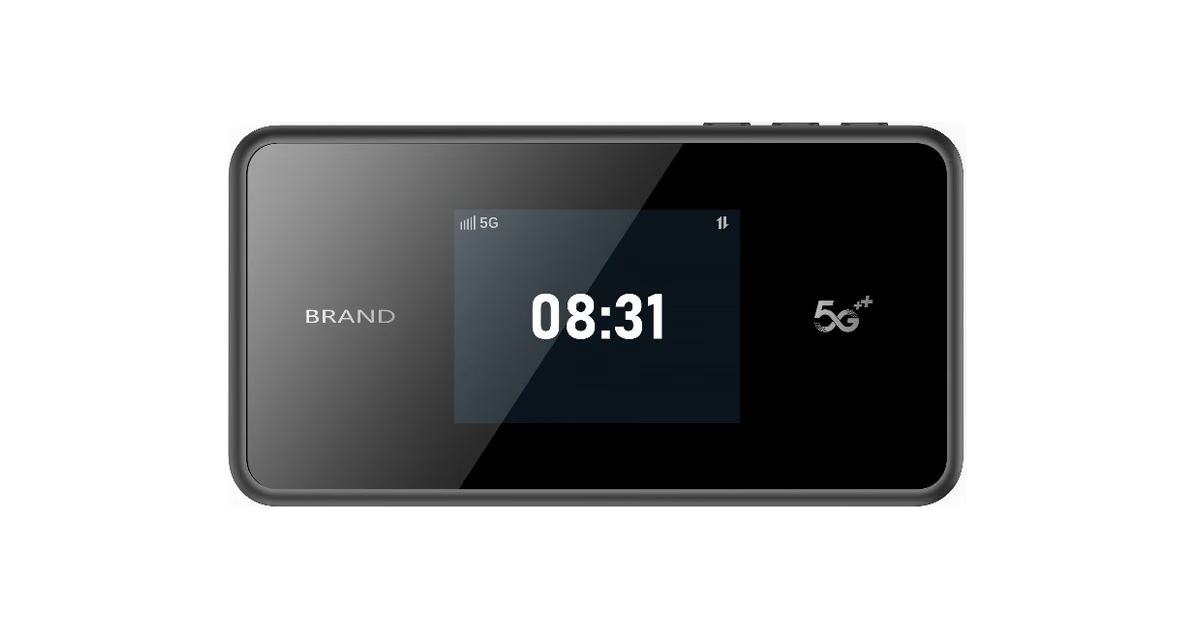
The M06 is a portable 5G RedCap hotspot. Its specification shows trade-offs that apply to most RedCap products, not only MiFi:
- 1Rx or 2Rx. A 1Rx design saves cost and space. 2Rx enables two downlink layers, which matters for a throughput-driven device such as a hotspot. The M06 uses 2Rx/1Tx with internal main and diversity antennas.
- Match the local link to the cellular link. The M06’s Wi-Fi 6 1x1 link (up to 286.8 Mbps) sits just above its 226 Mbps cellular peak. A larger Wi-Fi radio would add cost and power without adding usable speed.
- Band variants come first. RedCap only works where the operator runs 5G SA on bands the device supports. That is why the M06 has standard, EU and North America band versions. More detail is in our 5G RedCap MiFi design guide.
- Keep LTE fallback. Users move in and out of 5G SA coverage, so the M06 supports 4G LTE fallback at up to 150 Mbps / 50 Mbps.
8. Use Cases
- Portable hotspots and light fixed wireless: 5G SA connectivity at a lower BOM and power budget than full 5G. Example: the AceTel M06.
- Industrial gateways and wireless sensors: 5G SA connectivity, and network slicing where the operator offers it, for factory and utility equipment. These are covered in our Industrial IoT solutions.
- Video surveillance: cameras need sustained uplink but rarely need gigabit speeds, and RedCap’s uplink headroom over LTE Cat 1 suits them.
- Wearables: a 1Rx RedCap design fits small enclosures, and eDRX extends battery life.
- Telematics and fleet: in-vehicle gateways that carry video or bulk data are RedCap candidates. Low-rate trackers are a better fit for eRedCap, LTE Cat 1 or LTE-M. See Fleet Management solutions.
9. Pre-Specification Checklist
- Operator support: confirm the target operator has enabled RedCap on its 5G SA network in your deployment area. SA coverage alone is not enough.
- Bands: compare the module’s NR bands with the operator’s SA bands, and its LTE bands with the fallback layer.
- Rx count: choose 1Rx or 2Rx based on required throughput and enclosure size.
- Traffic profile: if the device needs only a few Mbps, compare eRedCap and LTE Cat 1 / LTE-M before committing to Rel-17 RedCap.
- Power: check eDRX and measurement relaxation support in the module and the network, then measure battery life on the live network.
- Certification: plan regional certification (for example CE or FCC) and any operator approval around the final band configuration.
10. FAQ
Is 5G RedCap the same as NR-Light?
Yes. NR-Light is an industry name that was used before standardization. 3GPP specified the device type in Release 17 as RedCap (Reduced Capability).
Does 5G RedCap work on 5G NSA networks?
No. RedCap devices do not support EN-DC, so they need a 5G Standalone network with RedCap enabled. On NSA-only networks, a multimode device falls back to LTE.
Is 5G RedCap faster than 4G LTE?
It depends on the LTE category and the RedCap configuration. The theoretical RedCap downlink peak ranges from about 85 Mbps (1 Rx, 64QAM) to about 227 Mbps (2 Rx, 256QAM) on a 20 MHz FDD carrier. A 2 Rx RedCap device can exceed LTE Cat 4. The M06 specifies 226/120 Mbps against Cat 4’s 150/50 Mbps. A 1 Rx RedCap module is slower than Cat 4 on the downlink, and its main benefit is native 5G SA access.
What is the maximum speed of 5G RedCap?
In FR1, the theoretical maximum is about 227 Mbps downlink (2 Rx, 256QAM, 20 MHz FDD) and, for a 1 Tx device such as the M06, about 121 Mbps uplink (256QAM). TDD bands, half-duplex operation and real network conditions reduce what a user measures.
What is the difference between RedCap and eRedCap?
Rel-17 RedCap limits bandwidth to 20 MHz. Rel-18 eRedCap reduces the device further, to a 5 MHz baseband bandwidth with a 10 Mbps peak, and targets LTE Cat 1-class devices.
Talk to an AceTel FAE About 5G RedCap
AceTel engineers can review your band list, throughput target and fallback requirements, and send evaluation samples of the M06 5G RedCap MiFi. For custom hardware, see our Full ODM Development program or the white label guide for RedCap MiFi.
Contact [email protected] or request a quote on the product page.
Technical insight published by AceTel's Field Application Engineering (FAE) and Hardware Architecture team. Tested across 3GPP and carrier-grade RF laboratory standards. Have project questions? Consult our engineers.